
Why Are Bowel Cancer Rates Rising and When to Get Checked
Bowel cancer rates are rising sharply in adults under 50. Dr Matthew Clarke, private GP in Bristol, explains why, the red flag symptoms, and when to get checked
Why Are Bowel Cancer Rates Rising and When to Get Checked
Bowel cancer is the UK’s fourth most common cancer and rates have recently risen in adults under 50. Cancer Research UK data show a 52% increase in bowel cancer cases in 25–49 year olds between 1993 and 2019, and England has seen one of the fastest rises in early-onset bowel cancer of any country in the world. Yet when caught early, more than 9 in 10 people survive. Knowing the red flag symptoms — and acting on them quickly — is one of the most important things you can do for your health.
As a private GP in Bristol, I often see patients who are worried about bowel symptoms. This article explains what’s driving the rise, the symptoms that should prompt a check, and when to consider seeing a private GP in Bristol for further assessment.
Quick facts: bowel cancer in the UK
Bowel cancer is the 4th most common cancer in the UK
Around 16,800 people die from it every year in the UK
9 in 10 cases occur in people aged 50 or over — but rates in under-50s are rising fastest
1 in 20 cases in the UK now occur in people under 50
Cases in 25–49 year olds rose 52% between 1993 and 2019
England has had one of the fastest rises in early-onset bowel cancer globally (around 3.6% per year)
Survival exceeds 90% when diagnosed at stage 1, falling to under 10% at stage 4
Why are bowel cancer rates rising?
Bowel cancer rates overall in the UK have actually fallen in older adults over recent decades, thanks largely to the success of NHS bowel cancer screening. The concerning trend is the rise in early-onset bowel cancer — cancer diagnosed in adults under 50 — which is happening across many high-income countries.
Researchers have not yet identified a single cause, but several factors appear to be driving the increase.
1. Lifestyle and diet
The most established risk factors include:
Obesity and being overweight, which has risen steadily in younger adults
Sedentary lifestyles and reduced physical activity
Diets high in processed and red meat
Low-fibre, ultra-processed diets
Heavy alcohol use
Smoking
A recent BMJ Oncology analysis found that bowel cancer was one of several cancers rising specifically in younger adults in England, with excess weight identified as a key — though not complete — explanation.
2. The gut microbiome
One of the most striking recent findings was published in Nature in 2025. Researchers from the Mutographs team analysed almost 1,000 bowel cancer genomes worldwide and found mutation patterns from colibactin — a toxin produced by certain strains of E. coli — were 3.3 times more common in patients diagnosed before age 40 than in those diagnosed in their 70s. This suggests that exposures in childhood may be programming bowel cancer risk decades later.
This is changing how doctors think about prevention: the gut microbiome may matter more, and earlier, than we previously believed.
3. Delayed diagnosis in younger adults
Bowel cancer in someone in their 30s or 40s remains very rare. However, as symptoms are more often attributed to other conditions in the younger patient, the awareness of possible cancer — both among patients and doctors — is crucial for early detection
Red flag symptoms: when to see a GP
Most people with these symptoms will not have bowel cancer. But because early diagnosis transforms outcomes, any of the following should prompt a GP appointment, especially if they persist for three weeks or more:
Blood in your poo or bleeding from your bottom (any colour — bright red, dark red, or black)
A persistent change in bowel habit — looser, more frequent stools, or new constipation
Unexplained weight loss
Persistent tummy pain, bloating or a lump in the abdomen
Unexplained tiredness (often caused by iron-deficiency anaemia from a slow bleed)
A single episode of rectal bleeding can have an innocent cause such as piles, but it should still be checked. The phrase I use with patients is simple: if something is new, persistent, or just not right for you, get it looked at.
When to get checked: screening and assessment
There are two different routes: screening (when you have no symptoms) and investigation (when you do).
NHS bowel cancer screening
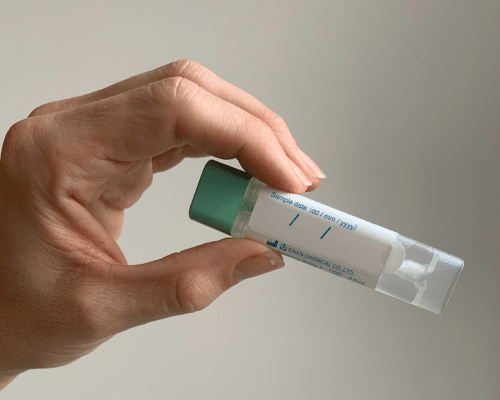
The NHS Bowel Cancer Screening Programme has now fully expanded to everyone aged 50–74 in England. You will automatically be sent a FIT kit (Faecal Immunochemical Test) through the post every two years. The kit detects microscopic amounts of blood in stool — often present long before symptoms appear.
What if you are under 50?
The NHS screening programme does not currently invite under-50s, but there are several scenarios where earlier assessment may be necessary:
You have persistent bowel symptoms (see red flags above)
You have a first-degree relative (parent, sibling, child) with bowel cancer, particularly if diagnosed under 50
You have a known genetic predisposition (such as Lynch syndrome or familial adenomatous polyposis)
You have inflammatory bowel disease (Crohn’s or ulcerative colitis)
You simply want reassurance and a faster route to investigation
In these situations, a private GP in Bristol can offer a same-week consultation, arrange a private FIT test, organise blood tests (including a full blood count to check for anaemia and inflammatory markers), and refer onwards for a colonoscopy if needed — typically much faster than the standard NHS pathway.
How to reduce your risk of bowel cancer
The encouraging news is that around half of bowel cancers are thought to be preventable through lifestyle. The evidence supports:
Maintaining a healthy weight
Regular physical activity — aim for at least 150 minutes of moderate exercise per week
Eating plenty of fibre — wholegrains, beans, pulses, vegetables and fruit
Reducing processed meat in your diet (bacon, ham, sausages, salami)
Limiting alcohol — the lower the better
Not smoking
Taking part in screening when invited
These are unglamorous interventions, but the cumulative effect over decades is significant.
How a private GP in Bristol can help
At Locke Medical, I offer thorough, unrushed consultations and assess patients experiencing bowel symptoms. A private GP appointment typically gives you:
A 30-minute consultation — enough time for a proper history, examination, and discussion
Same-week appointments, often the same day
Private FIT testing and blood tests with rapid turnaround
Direct private referral to consultant gastroenterologists at The Nuffield for colonoscopy if needed, usually within 1–2 weeks
Continuity — you can see the same GP each time
A clear, written plan you can share with your NHS GP
This is particularly valuable if you have been told you have “probably IBS” or “probably piles” but the symptoms are not resolving, or if your family history is making you anxious.
Frequently asked questions
Is bowel cancer really rising in young people?
Yes. Cancer Research UK data show a 52% rise in cases in adults aged 25–49 in the UK between 1993 and 2019. England has had one of the fastest rises in early-onset bowel cancer globally. However, the absolute numbers remain low — around 1 in 20 UK bowel cancer cases occur in under-50s.
What does blood in my poo mean — is it always cancer?
No. The most common cause of bright red rectal bleeding is haemorrhoids (piles), followed by anal fissures and polyps. However, blood in stool can also be a sign of bowel cancer, so any unexplained bleeding should be checked.
Can I get a FIT test privately in Bristol?
Yes. Locke medical can arrange a FIT test as part of an assessment, with results typically available within a few days. This is useful if you are under the NHS screening age, have symptoms, or simply want quick reassurance.
How quickly can I see a private GP in Bristol if I’m worried?
At Locke Medical, most patients are seen within 24–48 hours, often the same day. If investigations such as colonoscopy are needed, these can usually be arranged within 1–2 weeks privately at The Nuffield Hospital.
Should I be worried about IBS becoming bowel cancer?
IBS itself does not turn into bowel cancer and does not increase your risk. However, IBS-type symptoms can occasionally mask bowel cancer, particularly in younger adults — which is why a careful history, examination, and where appropriate a FIT test and blood tests, are important if symptoms change or fail to settle.
When in doubt, get it checked
The take-home message is straightforward. Bowel cancer is becoming more common in younger adults, but it remains highly treatable — particularly when caught early. The symptoms can be subtle and easily attributed to more common conditions. If something has changed and is not settling, do not wait.
If you would like a private GP appointment in Bristol to discuss bowel symptoms, family history, or arrange a FIT test, you can book a consultation at Locke Medical, Bristol.
Dr Matthew Clarke (MBBS BSc MRCS MRCGP) is a private GP in Bristol and Director of Locke Medical, based at The Nuffield Hospital. This article is for general information only and does not replace personalised medical advice. If you have symptoms you are concerned about, please consult with a GP.